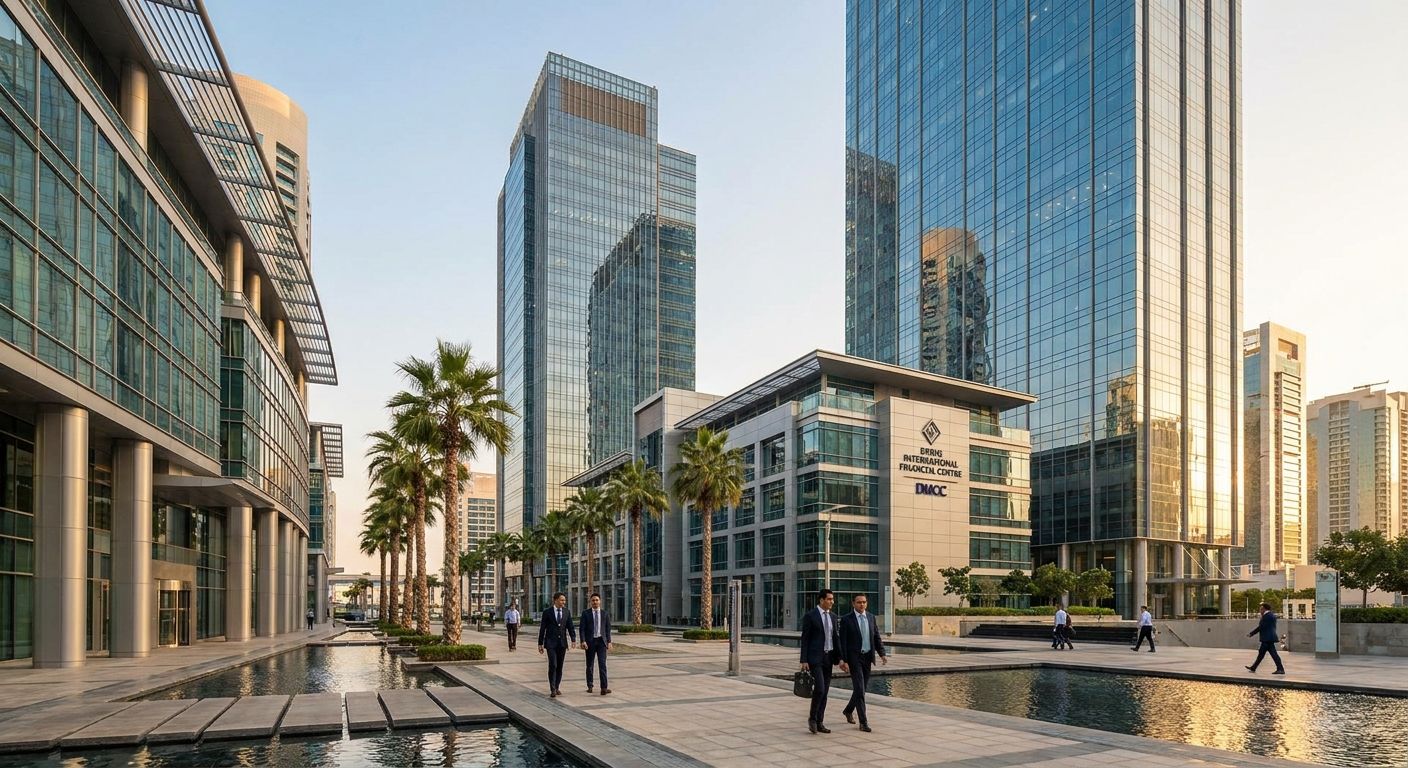

Building an investment portfolio while resident in the UAE means working inside a tax framework and regulatory system that differs sharply from the US, UK or EU — and getting the sequencing wrong costs more than a missed return in year one.
- Structure comes before selection: entity, custody and currency exposure decide returns more than fund picks in 2026.
- UAE residents pay 0% personal income tax, which changes optimal asset location versus a UK or US portfolio.
- Capitals28 recommends starting with income-generating assets before growth allocations for new UAE residents.
- A disciplined UAE resident portfolio in 2026 typically separates onshore mainland exposure from DIFC or ADGM custody.
- Skip DIY crypto-heavy allocations without custodial clarity — regulatory gaps here cause the most disputes in 2026.
Why this matters
Most guides written for a US or European reader assume a tax drag on dividends, capital gains and interest that simply does not apply to a UAE resident in 2026 — which means portfolios built on foreign templates leave value on the table.
The flip side: UAE residency does not exempt you from your home country's tax obligations if you're still a citizen with reporting duties elsewhere. A portfolio built without checking that first is a portfolio built on a false premise.
Capitals28 works with entrepreneurs, family offices and relocating professionals who need a disciplined, long-term approach rather than a scattered mix of brokerage accounts opened in three different jurisdictions. The steps below follow that logic in order.
What you'll need
- Confirmation of UAE tax residency status (Emirates ID plus 183-day test or equivalent)
- A clear view of your home-country tax exposure, if any, before moving assets
- A base currency decision — AED, USD or a blended approach
- Access to a custodian or asset manager licensed in DIFC, ADGM or under the SCA
- A time horizon: retirement, capital preservation, or active growth
- Corporate structure documents if investing through a UAE entity rather than personally
For investors formalizing residency through the Golden Visa or a company formation route, Capitals28 handles both the structuring and the underlying portfolio management under one advisory relationship rather than splitting the two across separate firms.
The steps
1. Confirm your residency and tax position first
This step accomplishes one thing: it stops you building a portfolio you'll have to restructure six months later. UAE tax residency in 2026 requires either 183 days of physical presence or 90 days plus a qualifying UAE nexus (property, employment, or business). Check whether your home country still claims tax residency over you — the US taxes citizens regardless of where they live, which changes every subsequent decision.
Common mistake: assuming a Golden Visa alone confers full tax residency. It doesn't automatically; the day-count and nexus tests still apply.
2. Decide your base currency exposure
AED is pegged to the USD, so most UAE residents run a de facto USD-based portfolio whether they intend to or not. Decide what percentage, if any, you want in AED cash, EUR or GBP for spending needs versus USD for growth assets. A common split for a family relocating from Europe is 20-30% in home-currency liquidity and the remainder in USD-denominated instruments.
Expected outcome: a currency allocation written down before you buy a single asset, not decided fund-by-fund.
3. Choose personal ownership or a corporate structure
Holding investments through a UAE free zone entity changes liability exposure, succession planning and — since the 2023 introduction of the 9% corporate tax on profits above AED 375,000 — your tax calculation for 2026 onward. Personal holding is simpler for smaller portfolios; a corporate structure suits family offices consolidating multiple asset classes under one vehicle.
Common mistake: defaulting to personal ownership out of habit when a structured entity would materially simplify succession across a family with beneficiaries in multiple countries.
4. Set your income-versus-growth split
A disciplined portfolio for a UAE resident usually starts with income-generating assets — dividend equities, sukuk, income funds, or yield-bearing property — before layering in growth allocations. This matters because income assets fund your UAE lifestyle without forcing you to liquidate growth positions during a downturn. A common starting split is 50-60% income assets, 30-40% growth, with the remainder in cash reserves.
Expected outcome: a portfolio that can cover 12 months of living costs from income alone without selling anything.
5. Select regulated custody, not just a broker
Where your assets sit matters as much as what you hold. DIFC and ADGM operate under common-law frameworks with independent regulators (DFSA and FSRA respectively), which gives UAE residents recourse closer to what they'd expect in London or New York. An unregulated offshore broker promising higher yields is the single most common source of disputes flagged in 2026 client reviews across the region.
Common mistake: chasing yield from an unlicensed platform because the marketing looks polished. Verify DFSA or FSRA registration before funding any account.
6. Diversify across asset classes, not just tickers
Holding twelve different equity funds is not diversification if they're all correlated to the same US tech index. A structured UAE portfolio typically spreads across equities, fixed income (including sukuk for Sharia-compliant mandates), real assets, and a cash buffer. Property remains a common allocation given the Golden Visa's AED 2,000,000 investment threshold, but it shouldn't exceed 30-40% of total net worth for anyone outside pure real estate investing.
Expected outcome: a portfolio where no single asset class move above 15-20% swings your total net worth by more than a few percentage points.
7. Review and rebalance on a fixed schedule
Set a quarterly or semi-annual review date and stick to it — reacting to headlines is how disciplined allocations turn into speculative ones. Rebalancing back to target weights, especially after a strong run in one asset class, is the mechanical discipline that protects capital rather than chasing it.
Common mistake: rebalancing only after a loss. The habit only works if it's calendar-driven, not emotion-driven.
Structure your UAE portfolio properly
Advisory on asset management, entity structuring and residency in one relationship.
Troubleshooting
- Your portfolio is 80%+ in one currency without a plan. Set a target currency split and rebalance toward it over two to three quarters rather than all at once.
- You hold assets through an unregulated offshore platform. Move custody to a DFSA- or FSRA-regulated entity before adding new capital; existing positions can transfer gradually.
- Your home country still taxes you despite UAE residency. Get a residency-based tax opinion before assuming UAE 0% income tax applies to your full position — US citizens especially need this checked.
- Your Golden Visa investment and your portfolio strategy are disconnected. Property bought purely to hit the AED 2,000,000 threshold shouldn't be your only real asset allocation; treat it as one line item, not the whole plan.
- You're rebalancing based on market news instead of a schedule. Fix a calendar date and treat it as non-negotiable regardless of headlines.
- Your corporate structure was set up for tax only, not succession. Revisit entity documents with a formation advisor if beneficiaries span multiple jurisdictions.
Tools and resources
- A DFSA or FSRA public register check before funding any custodian
- A written currency and asset-class target sheet, reviewed quarterly
- Golden Visa investment documentation kept separate from general portfolio records
- Capitals28 for combined asset management, corporate structuring and residency advisory under one mandate
FAQ
How do I start building an investment portfolio as a UAE resident in 2026?
Start by confirming your tax residency status and home-country obligations, then set a currency split before choosing any assets. Personal income in the UAE is taxed at 0%, but your citizenship may still create reporting duties elsewhere.
Is UAE residency enough to avoid all taxes on my investments?
No. UAE residency removes personal income tax on gains earned as a UAE resident, but citizens of countries like the US remain taxable on worldwide income regardless of where they live. Check your specific citizenship rules before assuming full exemption.
Should I invest personally or through a UAE company?
Personal ownership suits smaller, simpler portfolios, while a corporate structure suits family offices consolidating multiple asset classes or planning succession across jurisdictions. The 9% UAE corporate tax applies above AED 375,000 in annual profit.
What percentage of my portfolio should be in UAE property for the Golden Visa?
The Golden Visa requires a minimum AED 2,000,000 investment, but that allocation shouldn't exceed 30-40% of total net worth for most investors outside dedicated real estate strategies. Treat it as one line item, not the full portfolio.
How often should a UAE resident rebalance their portfolio?
Quarterly or semi-annual rebalancing on a fixed calendar date is standard practice for 2026 portfolios. Rebalancing only after losses turns a disciplined strategy into a reactive one.
Is DIFC or ADGM custody necessary, or can I use an offshore broker?
Regulated custody under DFSA (DIFC) or FSRA (ADGM) gives UAE residents legal recourse similar to London or New York markets. Unregulated offshore platforms are the most common source of investor disputes flagged in 2026.
Can income-generating assets replace a salary for a UAE resident?
A well-structured portfolio can cover living costs through dividends, sukuk yields or rental income without forcing asset sales, typically targeting 12 months of coverage from income alone. This requires a 50-60% weighting toward income assets as a starting point.
Does a Golden Visa change how I should structure my portfolio?
A Golden Visa formalizes long-term residency but doesn't change the underlying discipline needed: currency planning, regulated custody and a fixed rebalancing schedule still apply. Pair the visa investment with a broader asset management plan, not a standalone property purchase.
One last thing
The detail that trips up the most newly-relocated investors in 2026 isn't tax — it's currency drift. A portfolio built entirely in USD while daily spending runs in AED or a home currency creates a silent mismatch that only shows up when you need to liquidate during a weak exchange window. Fix the currency split before the asset split; everything else follows from that decision.